


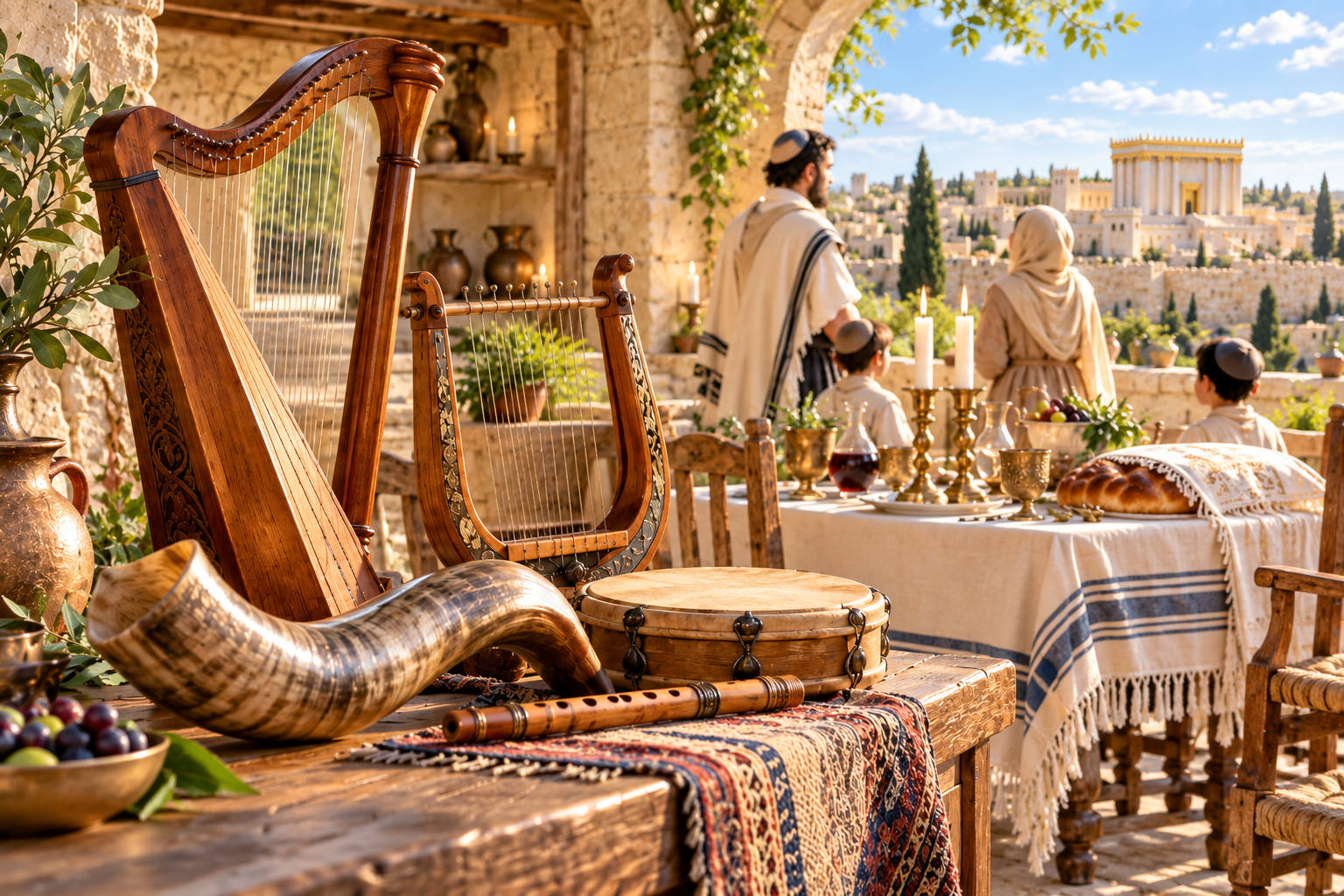
Torah Portion LECH-LECHA– Genesis (Beresheet) 12:1-17:27 Haftarah: Isaiah 40:27-41:16
A psalm, a song for the Shabbat. It is good to praise ADONAI and to make music to Your Name, Elyon, to declare Your love in the morning and Your faithfulness at night, with a ten-string harp, with resounding music on the lyre.” Psalms 92:1-4 TLV
Shabbat Shalom, dearly beloved,
The Rabbinical tradition of our days prohibits the use of musical instruments on Shabbat. Is that Biblical or a residue left from a time of judgment? We will discover this in the Holy Scriptures.
There are several strong biblical passages showing that musical instruments were used in worship on Shabbat, especially in the Temple service.
Psalm 92—explicitly “A Song for the Shabbat Day”
This is perhaps the clearest passage:
“A psalm, a song for the Shabbat day. It is good to praise Adonai and to make music to Your Name, Elyon, to declare Your love in the morning and Your faithfulness at night, with a ten-string harp with resounding music on the lyre.” Psalm 92:1–4
Hebrew:
מִזְמוֹר שִׁיר לְיוֹם הַשַּׁבָּת׃
טוֹב לְהֹדוֹת לַיהוָה
וּלְזַמֵּר לְשִׁמְךָ עֶלְיוֹן׃
…
עֲלֵי־עָשׂוֹר וַעֲלֵי־נָבֶל
עֲלֵי הִגָּיוֹן בְּכִנּוֹר׃
The instruments named are:
עָשׂוֹר—asor: ten-stringed instrument
נֵבֶל—nevel: harp/lyre-type instrument
כִּנּוֹר — kinnor: lyre
So the very psalm designated “for the Shabbat day” specifically speaks of praising YHVH with stringed instruments.
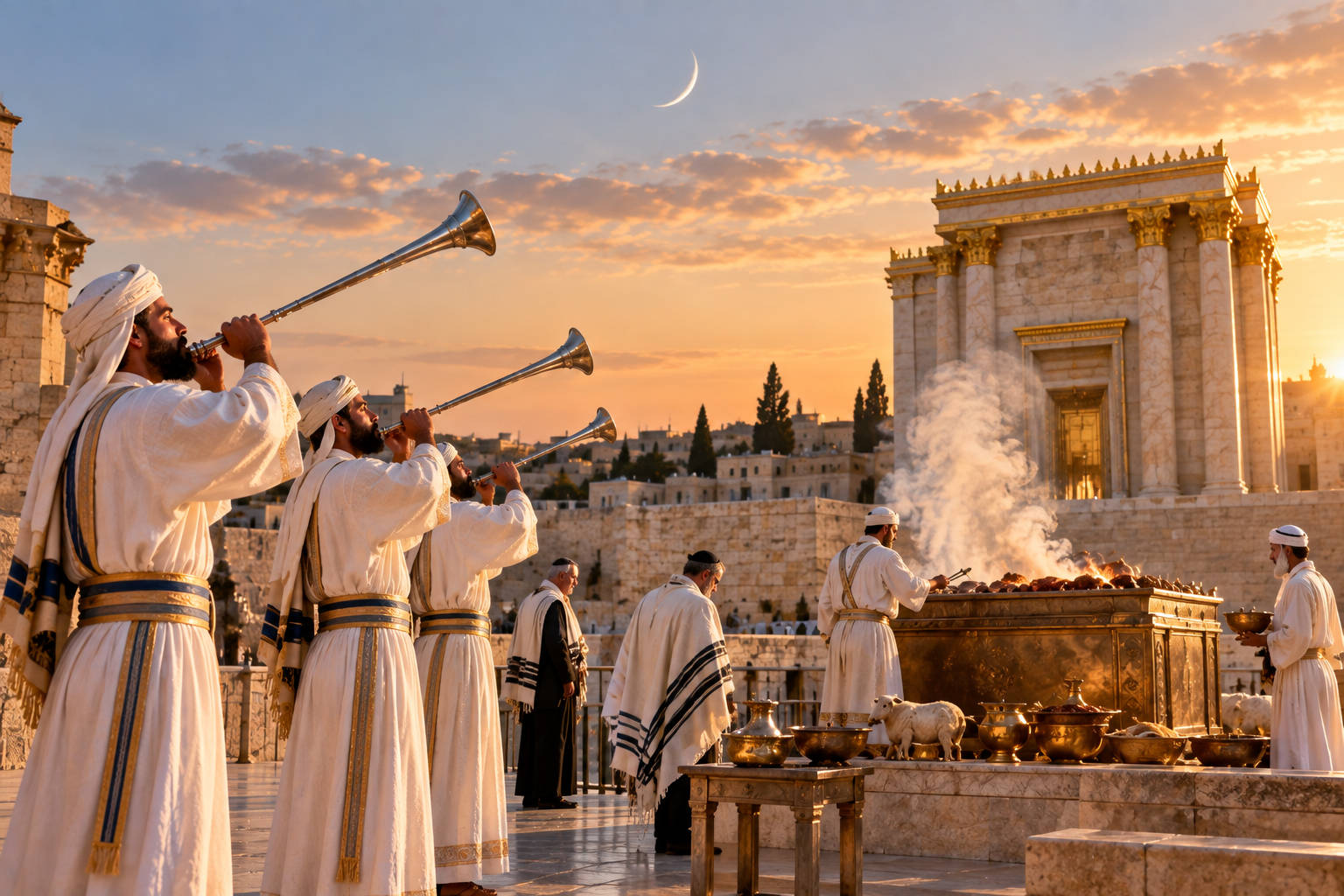
The Shabbat Temple offering included trumpet blasts—Numbers 10:10.
YHVH commanded:
“Also in the day of your gladness, and in your appointed feasts, and at the beginnings of your months, you are to blow the trumpets over your burnt offerings and over the sacrifices of your fellowship offerings. They will be a reminder of you before your God. I am Adonai your God.” Numbers 10:10
The Torah separately commands a special Shabbat burnt offering every Shabbat in Numbers 28:9–10.
The Temple service therefore included prescribed instrumental sound associated with the sacrificial worship, while Shabbat itself had its own additional offering.
The Levites’ musical ministry accompanied the burnt offerings
2 Chronicles 29:27–28 gives a particularly clear description of how the Temple offering was conducted:
“When the burnt offering began, the song of Adonai began also, with the trumpets, together with the instruments of David, king of Israel. The whole congregation prostrated themselves, while the singers sang and the trumpeters sounded. All this continued until the burnt offering was finished.”
This establishes that instrumental music was not merely entertainment around the Temple—it was integrated into the sacrificial worship.
David established the musicians for the continual Temple ministry.
1 Chronicles 16:4–6 says David appointed Levites:
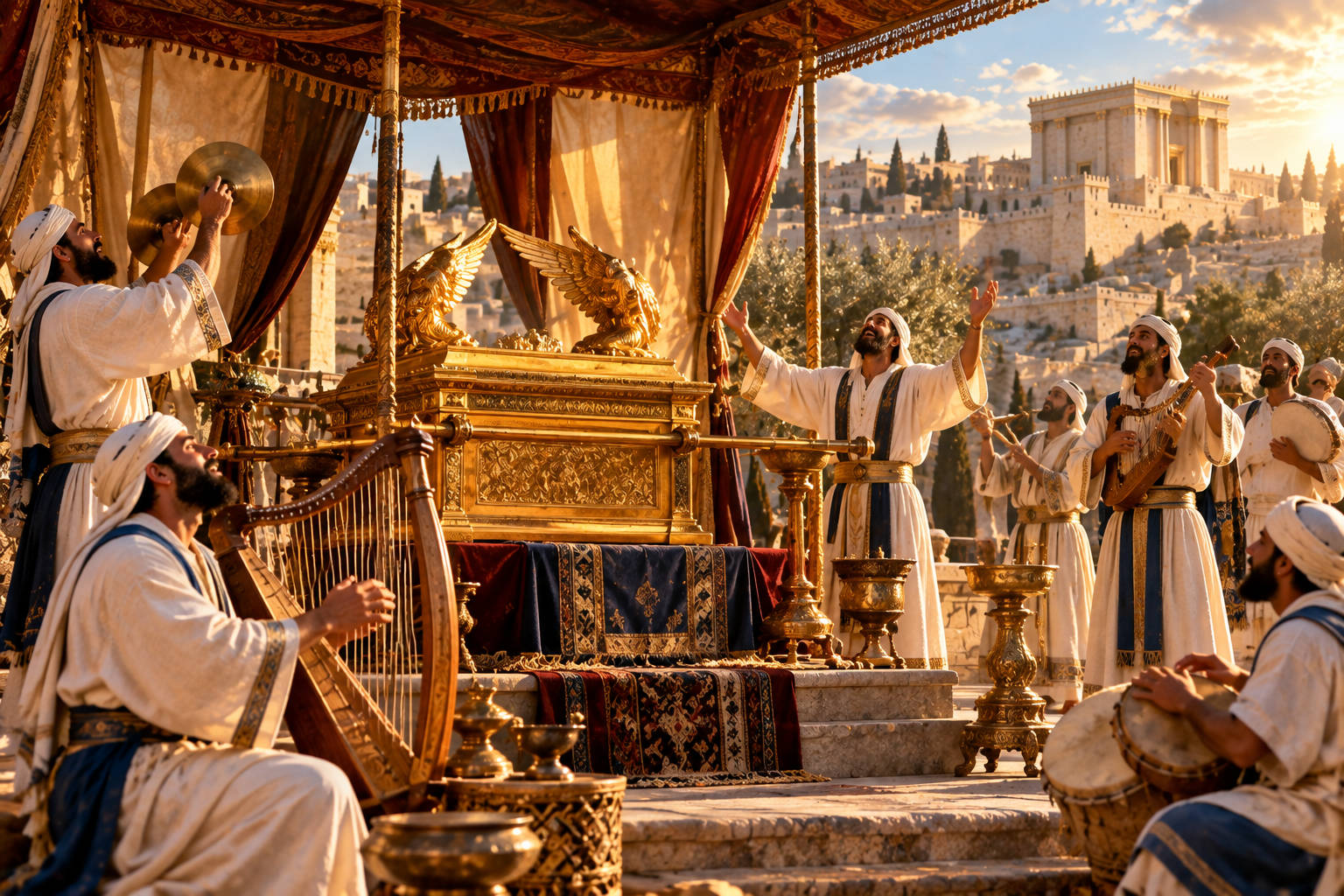
“To minister before the Ark of Adonai, to celebrate, thank, and praise Adonai, the God of Israel.”
It then names the instruments:
“…Asaph with cymbals, and Benaiah and Jahaziel the kohanim were regularly blowing trumpets before the Ark of the covenant of God.”
The important concept is תָּמִיד—tamid, “continually/regularly.” The worship ministry was established as an ongoing sacred service.
1 Chronicles 23 connects Levitical praise with the regular offerings
1 Chronicles 23:30–31 says the Levites were:
“to stand every morning to thank and praise Adonai, and likewise in the evening, and whenever burnt offerings were offered to Adonai on Shabbatot, New Moons, and appointed festivals, according to the number required of them, regularly before Adonai.”
This is especially significant because the passage explicitly names:
לַשַּׁבָּתוֹת—laShabbatot—”on the Shabbats.”
The Levitical ministry of praise was functioning in connection with the sacrifices specifically offered on Shabbat, New Moons, and the Moedim.
Chronicles explicitly identifies the Levites as instrumental musicians.
1 Chronicles 23:5 says:
“…4,000 are praising Adonai with the instruments that I made for giving praise.”
2 Chronicles 8:14 says Solomon maintained David’s prescribed divisions of the kohanim and Levites for their daily service and praise.
So when 1 Chronicles 23:30–31 says the Levites ministered on Shabbatot, the same context identifies these Levites as singers and instrumental musicians.
The strongest biblical case
Taken together, the argument is quite direct:
Psalm 92 is specifically titled “A Psalm, a Song for the Shabbat Day,” and calls for praise with asor, nevel, and kinnor.
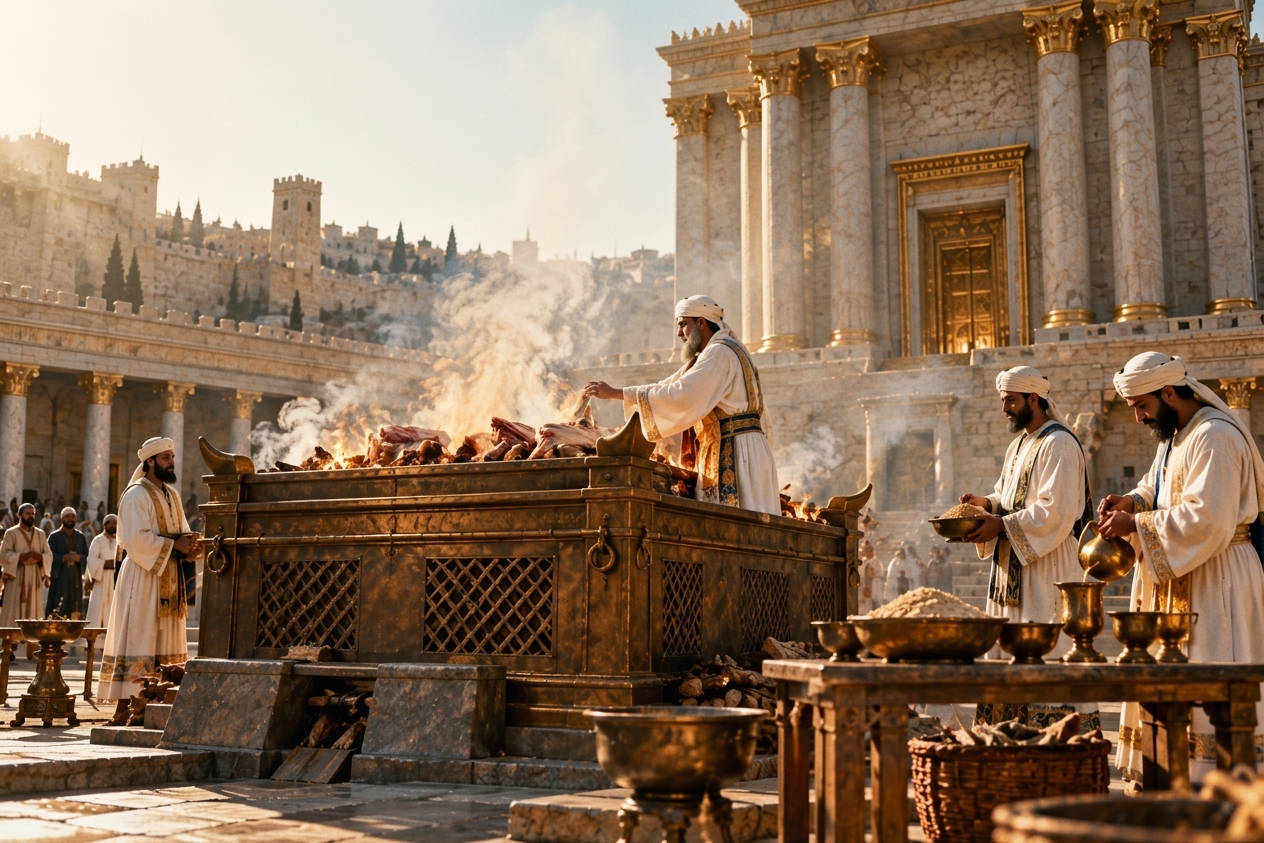
Numbers 28:9–10 establishes a special Temple sacrifice every Shabbat.
1 Chronicles 23:30–31 explicitly places the Levitical praise ministry at the offerings made on Shabbatot.
2 Chronicles 29:27–28 tells us that the Temple burnt offering was accompanied by song, trumpets, and the instruments of David.
Therefore, Scripture gives substantial evidence that instrumental worship was part of the sacred worship associated with Shabbat, particularly in the Temple service. The idea that playing an instrument is intrinsically incompatible with Shabbat does not come from an explicit Torah prohibition against musical instruments on Shabbat.
So where does it come from?
Divine judgment
There are several important passages where the stopping of music, singing, rejoicing, or festal celebration is presented as a consequence of sin and divine judgment. One passage is especially relevant because it explicitly mentions Shabbat.
Amos 8:3–5—songs silenced, with Shabbat in the immediate context, Amos prophesies judgment against Israel:
“The songs of the palace will become wailings in that day…” — Amos 8:3
Then the reason is given: oppression, dishonesty, and greed. The offenders say:
“When will the New Moon be over so we may sell grain? Or Shabbat, so we may open the wheat market?” — Amos 8:5
The chapter later returns to the judgment upon their celebration:
“I will turn your festivals into mourning, and all your songs into lamentation.” — Amos 8:10
So Amos creates a striking connection: Israel dishonors YHVH—including impatiently waiting for Shabbat to end so commerce can resume—and judgment transforms songs into lamentation.
Isaiah 24:7–9—Instruments and joyful singing cease under judgment.
This is one of the strongest texts:
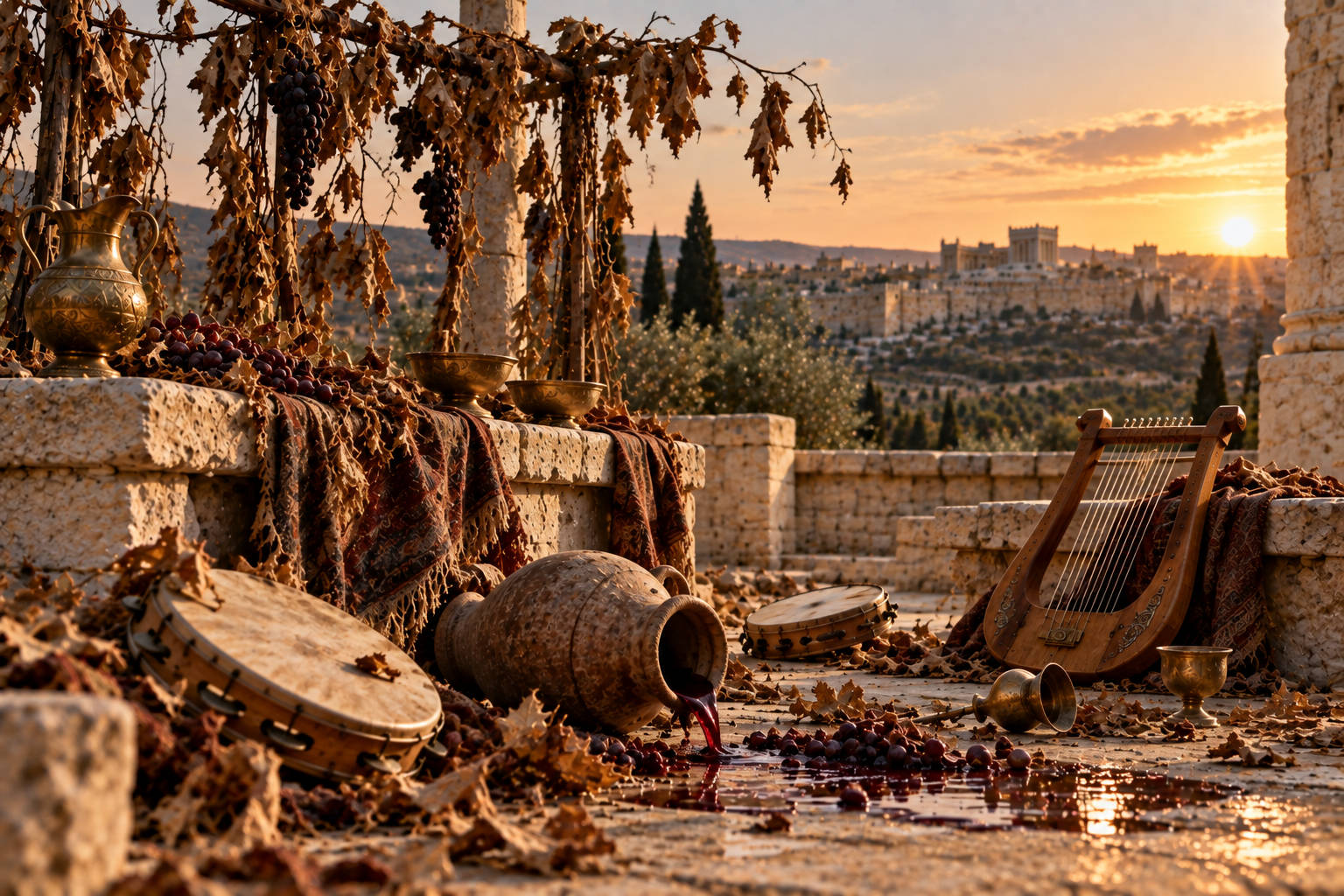
“The new wine mourns, the vine withers; all the merry-hearted sigh. The joyful tambourines have ceased, the noise of revelers has stopped, the joyful harp has ceased. They no longer drink wine with song…” — Isaiah 24:7–9
Hebrew includes:
שָׁבַת מְשׂוֹשׂ תֻּפִּים
“The joy of the tambourines has ceased.”
And:
שָׁבַת מְשׂוֹשׂ כִּנּוֹר “The joy of the kinnor has ceased.”
The verb שָׁבַת—shavat—means to cease, stop, or rest—the same Hebrew root associated with Shabbat (שַׁבָּת).
That does not mean the verse says “the instruments stopped on Shabbat.” Rather, it says that under judgment, their joyful instrumental music ceased.
Isaiah 5:11–12 — instruments present, but hearts far from YHVH
Isaiah condemns people whose celebrations are full of music:
“The harp and lyre, tambourine and flute, and wine are at their banquets, but they do not notice the deeds of Adonai, nor do they see the work of His hands.” — Isaiah 5:12
The problem is clearly not the instruments themselves. The instruments—kinnor, nevel, tof and chalil—are present, but the people have become spiritually insensitive to YHVH and are sinning with drinking much wine. Judgment follows in the next verses.
Jeremiah 7:34—YHVH causes joyful voices to cease
Because of Judah’s sin and coming judgment:
“Then I will make to cease from the cities of Judah and from the streets of Jerusalem the voice of joy and the voice of gladness, the voice of the bridegroom and the voice of the bride, for the land will become a ruin.” — Jeremiah 7:34
The same prophetic formula occurs in Jeremiah 16:9; 25:10.
Jeremiah 25:10 goes even further:
“Moreover, I will banish from them the voice of joy and the voice of gladness, the voice of the bridegroom and the voice of the bride, the sound of millstones and the light of the lamp.”
The cessation of joyful sound is a sign that judgment has overtaken the land.
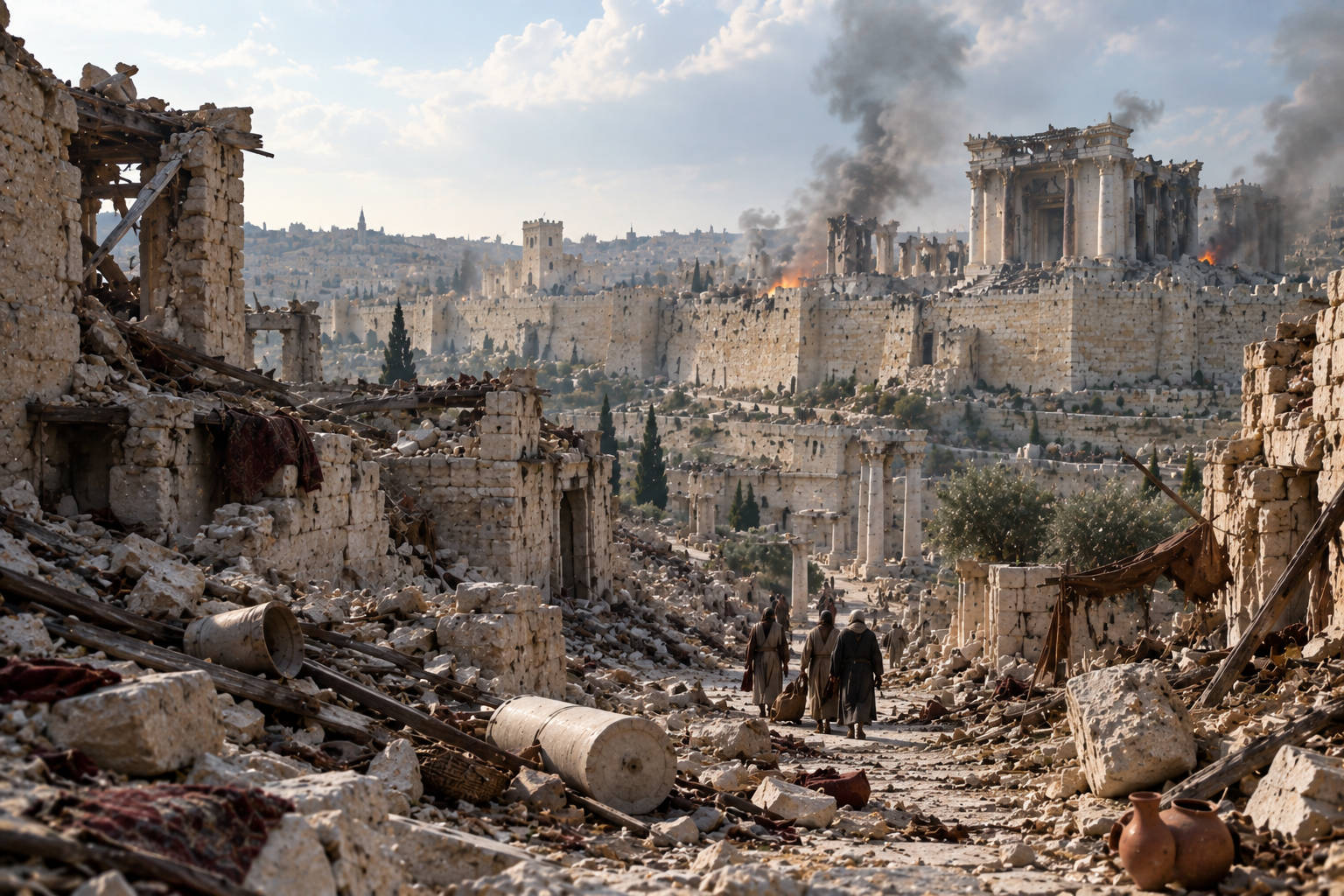
Lamentations 5:14–15—music stops after Jerusalem’s destruction.
After Jerusalem’s judgment:
“The elders have ceased from the gate, the young men from their music. The joy of our heart has ceased;
Our dancing has turned into mourning.” — Lamentations 5:14–15
Then comes the reason:
“The crown has fallen from our head. Oy to us, for we have sinned!” — Lamentations 5:16
This is particularly explicit:
Sin leads to judgment, then the music ceases, joy ceases, and dancing becomes mourning.
Hosea 2:13 [English 2:11]—this one explicitly includes Shabbat.
This is probably the passage closest to what we are looking for:
“I will also put an end to all her rejoicing—her festivals, her New Moons, her Shabbatot, and all her appointed festivals.” — Hosea 2:13 [2:11 in many English Bibles]
Hebrew:
וְהִשְׁבַּתִּי כָּל־מְשׂוֹשָׂהּ
חַגָּהּ חָדְשָׁהּ וְשַׁבַּתָּהּ
וְכֹל מוֹעֲדָהּ
Ve-hishbati kol-mesosah,
chaggah, chodshah, ve-Shabbattah,
ve-khol mo’adah.
Literally:
“I will cause all her rejoicing to cease—her feast, her New Moon, her Shabbat, and all her appointed times.”
This is very significant for our question. Shabbat itself was supposed to be associated with rejoicing and worship, but because of Israel’s unfaithfulness, YHVH declares that He will cause that rejoicing to cease.
So I would distinguish two biblical ideas carefully:
The normal biblical pattern:
Shabbat includes worship, singing, and instruments with much dancing and rejoicing.
Psalm 92 is the clearest example.
The judgment pattern:
Sin/rebellion leads to judgment when Shabbat/festal rejoicing is disrupted, and then singing, dancing and instruments cease because of mourning.
Hosea 2, Amos 8, Isaiah 24, Jeremiah 7/25, and Lamentations 5 together make that pattern especially strong.
To Summarize
Torah/Tanakh: instrumental worship existed, including in connection with Shabbat Temple worship.
Later rabbinic halacha: after the biblical period, the Sages established a protective prohibition against instrumental playing on Shabbat because of the possibility of repairing an instrument (that might break while playing).
Shulchan Aruch: codifies that rabbinic restriction.
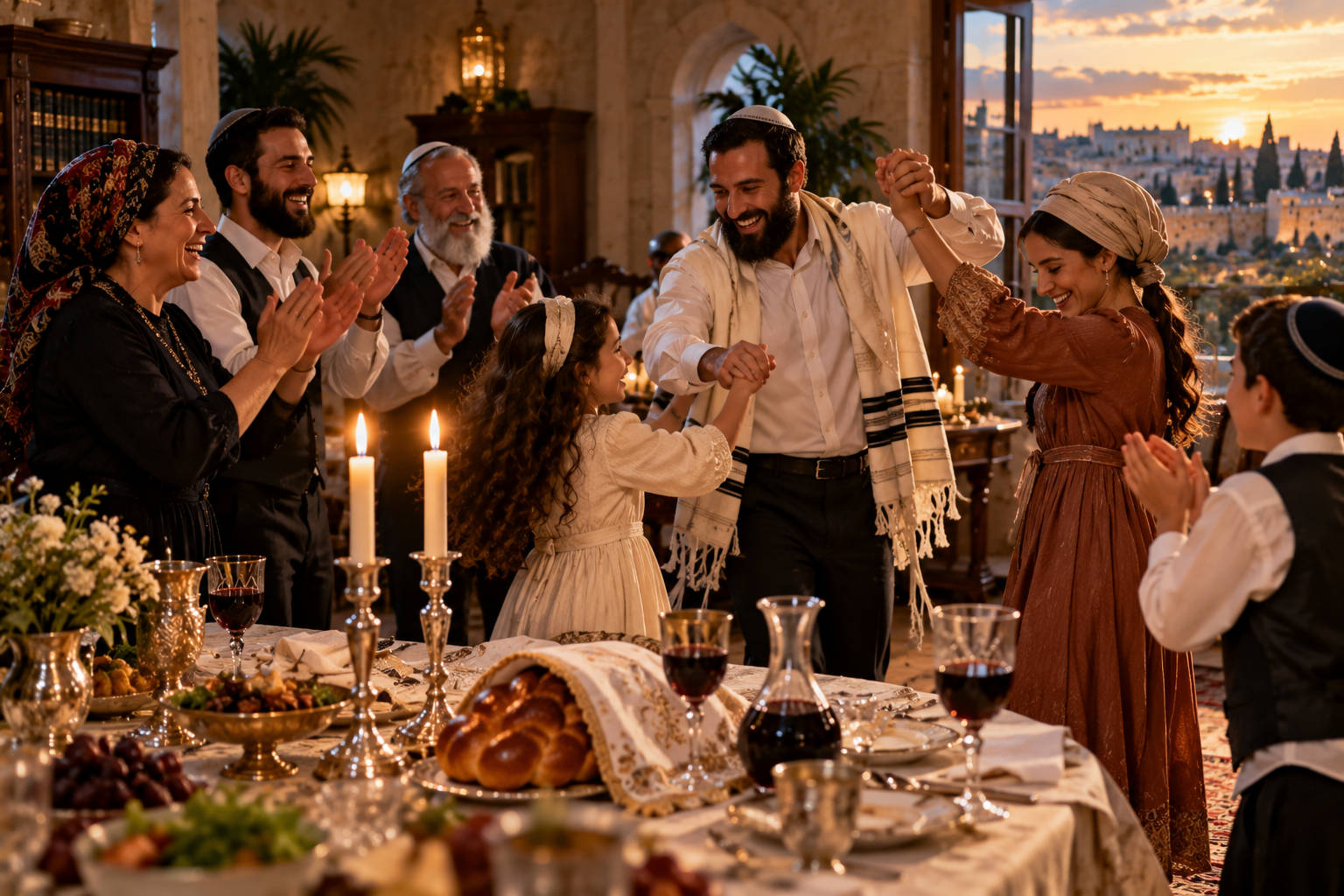
Rema/Tosafot: records some later leniency concerning related activities such as clapping and dancing because ordinary people were no longer proficient at repairing instruments—but normative Orthodox practice generally continues to prohibit actually playing musical instruments on Shabbat.
There is therefore a real distinction between what Scripture itself commands/prohibits and the subsequent rabbinic fence (gezerah) established by halachic authorities.
The righteous in heart are commanded to sing, dance, and rejoice at all times before YHVH and especially on the Shabbat day.
A psalm, a song for the Shabbat. It is good to praise ADONAI and to make music to Your Name, Elyon, to declare Your love in the morning and Your faithfulness at night, with a ten-string harp, with resounding music on the lyre.” Psalms 92:1-4 TLV
Moreover, as believers in the Jewish Messiah, our salvation moves us to praise Him, especially on the Shabbat day with all our musical instruments, voices, dances, and breath.
“I will rejoice greatly in ADONAI. My soul will be joyful in my God. For He has clothed me with garments of salvation; He has wrapped me in a robe of righteousness—like a bridegroom wearing a priestly turban, like a bride adorning herself with her jewels. For as the earth brings forth its sprouts, and as a garden causes things sown to spring up, so ADONAI Elohim will cause justice and praise to spring up before all the nations.” Isaiah 61:10-11 TLV
And especially on Shabbat
“Also the foreigners who join themselves to ADONAI, to minister to Him, and to love the Name of ADONAI, and to be His servants—all who keep from profaning Shabbat, and hold fast to My covenant—these I will bring to My holy mountain, and let them rejoice in My House of Prayer. Their burnt offerings and sacrifices “(of praise) will be acceptable on My altar. For My House will be called a House of Prayer for all nations.”” Isaiah 56:6-7 TLV
Your Israeli Friends and Mentors,
Archbishop Dominiquae and Rabbi Baruch Bierman
“For Zion’s sake I will not keep silent” Isaiah 62:1


Order “Truly Messianic” book and share it with others
https://www.zionsgospel.com/shop/truly-messianic/
Watch: Forgiveness Part 1
- Shabbat Letter ads
Become a member of the United Nations for Israel & join our monthly member’s online conference. You will receive fresh updates, instructions, and prophetic teaching live monthly, and be part of the Esther Church standing for Israel!
Send Your Tithes & Offerings
- Online: https://kad-esh.org/donations/
- Email us at info@kad-esh.org for bank details.
- By Zelle: info@kad-esh.org
- Call us in the USA at 1-972-301-7087
- Checks in USD, Canadian Dollars, or British Pounds are to be sent to Kad-Esh MAP Ministries, 52 Tuscan Way Ste 202-412, St Augustine, Florida 32092, USA
- Western Unions & Money Grams addressed to Paulette Cowan, 52 Tuscan Way Ste 202-412, St Augustine, Florida 32092, USA


Bring Life to Israel!
We invite you to plant a fruit tree in memory of the Israelis murdered on October 7, and in memory of your own loved ones that have departed.
Let us bring life from the dead by planting new trees to sustain Israel & to reclaim the promised Land.
“Those who sow in tears will reap with a song of joy.” Psalms 126:5 TLV
Support our projects in Israel
Help us to continue broadcasting from Israel, assisting Israeli families and communities in urgent need of food and essential supplies, and planting trees in the Holy Land.
We are Your Boots on the Holy Ground.
Subscribe to our YouTube Channel
Watch the latest broadcasts from Archbishop Dominiquae Bierman
For the Latest Updates from Israel, join our Telegram Channel
Pray and declare the Word over Israel

Join the United Nations for Israel – For Such a Time as This

Study at GRM Israeli Bible Institute
You’ll never need to take another Bible School again. GRM Bible Institute is a washing machine that leads you to the 1st century truth. You will discover the original Gospel made in Zion that has set many free.
Testimonies from the students:
I was second in command for a nationwide gang, but with the help of YHVH and GRM Bible School, I have begun to denounce that, after 21 years of membership. The enemy has been attacking me because of it. He knows he is losing a warrior, but I fight a different war for a different Master now. – J.M.
I used to be confused and uncomfortable because I didn’t know what to believe. There are so many different doctrines, all going against each other and teaching different things. I now understand the Gospel better and know my faith’s roots. – E.P
I have been wrong all my life, but now I understand what God wants from me! – R.D.
*Full or partial scholarships can be requested in case of extreme need. Please submit your requests to info@grmbibleschool.com explaining the reason for your request.
Sign our petition to outlaw public display of Swastikas and Nazi and Hamas flags
Support the MAP Prison Ministry
The MAP prison ministry, pioneered by Rabbi Baruch Bierman, has expanded fast. We are growing into thousands of students studying GRM Bible School behind bars. Many lives are being completely transformed!
Support this life-changing ministry through prayers and donations.

Read the Amazing testimonies of our inmate students from
Vessels of Fire – Testimonies from Behind BarsOur Ministries & Resources
To invite the Jewish apostles to preach and minister in your city and country, Email us at info@kad-esh.org
Join the Righteous of the Nations
Become our special partner by committing to support UNIFY with a monthly donation of $100 or more. As a “Righteous of the Nations” member, you will have access to exclusive online meetings with Archbishop Dominiquae Bierman.